
Concrete Block Retaining Walls: Are They the Best Choice for Commercial Properties?
Derksen Excavating
Concrete block retaining walls are one of the most trusted solutions for shaping commercial landscapes, managing elevation changes, and supporting high-traffic areas. Many property owners choose them for parking lots, industrial sites, retail centers, and multifamily developments because they deliver long-term durability, structural integrity, and a clean, professional appearance. Whether they are the best choice for a specific commercial property depends on how the wall is engineered, how the site behaves, and how well the system is designed to avoid retaining wall failure.
To understand their advantages, it helps to look closely at how commercial retaining walls function, what makes segmental retaining wall systems effective, and which engineering decisions support lasting performance.
Why Concrete Block Retaining Walls Fit Commercial Sites So Well
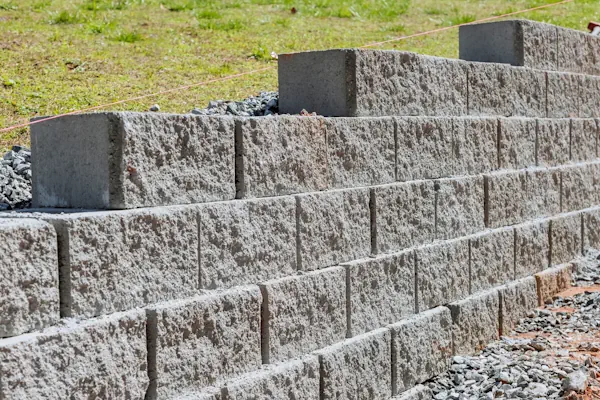
Concrete block systems offer a level of strength and adaptability that works particularly well for commercial environments. These blocks interlock, resist movement, and create a stable retaining structure that is capable of handling demanding site conditions. When a commercial property includes steep slopes, uneven elevations, or large open areas, block systems allow builders to construct curved walls, multi-tiered structures, or tall reinforced retaining walls without requiring specialized forms.
They also streamline construction. Because blocks are manufactured to consistent standards, installation remains efficient and predictable. The variety of block colors, textures, and finishes helps commercial property owners match the surrounding architecture and maintain a cohesive appearance across the site. Before considering aesthetics, though, the most important factor is how these walls handle the physical forces that act on them every day.
The Engineering Behind Retaining Wall Stability
The long-term performance of any wall depends on proper retaining wall engineering. Commercial retaining walls encounter heavier demands than residential ones, not only from soil pressure and groundwater movement but also from the added weight of vehicles, service equipment, and pedestrian traffic above or near the structure.
A well-designed wall takes all of that into account. Proper engineering evaluates soil density, backfill material, surcharge loads, and water flow patterns. Without this analysis, even high-quality materials can shift or settle over time. The National Concrete Masonry Association’s Segmental Retaining Walls Best Practices Guide explains that using appropriate materials, following established design methodology, and accounting for site variables such as soil conditions and loading sources are critical for long-term SRW performance.
A strong system begins with the right foundation, continues with properly reinforced backfill, and relies on thoughtful design choices that match the wall’s height and purpose. These steps help prevent the kinds of problems that commonly appear in poorly designed commercial retaining walls.
The Most Common Causes of Retaining Wall Failure
Even a well-built wall can deteriorate if essential structural elements are overlooked. Poor drainage is the most frequent cause of retaining wall failure. When water collects behind the wall with no path to escape, it increases pressure on the structure and can cause bulging or tilting. This is especially problematic around asphalt parking lots and industrial sites where runoff moves quickly during major storms.
Other issues can also contribute to failure. Insufficient compaction leaves soft pockets of soil that settle as the ground shifts seasonally. Drainage pipes that are too small or incorrectly positioned cannot remove water fast enough, allowing hydrostatic pressure to build. Walls without enough geogrid reinforcement struggle to resist lateral soil pressure, particularly as they increase in height. Problems can also arise when non-engineered blocks are used in areas that require commercial-grade materials or when the site’s soil pressure is underestimated.
Most failures result from design or installation errors rather than the blocks themselves. When commercial retaining wall blocks are paired with proper engineering and installed by experienced retaining wall contractors, these issues are almost always preventable.
Choosing the Right Commercial Retaining Wall Blocks
Commercial retaining wall blocks are designed specifically for strength and stability, with interlocking features that allow them to resist both vertical and horizontal pressures. Their weight and modular structure help create a stable wall that can support heavy site demands, including drive aisles, landscaped terraces, and multilevel commercial grade changes.
These blocks also offer design flexibility. Their modular format allows walls to curve, wrap around site features, or transition in height without sacrificing structural performance. With various profiles, colors, and finishes available, commercial property owners can maintain a cohesive look while ensuring the wall meets engineering requirements.
Even with these advantages, reinforcement plays a major role in creating retaining walls that can handle long-term commercial use.
How Geogrid Soil Reinforcement Strengthens Commercial Walls
One of the greatest advantages of concrete block retaining walls is how effectively they integrate with geogrid soil reinforcement. Geogrid stabilizes the soil mass behind the wall, helping the soil and wall face work together as a unified structure. This improves load distribution and significantly increases retaining wall stability.
Geogrid becomes especially important as walls grow taller or as soil conditions become more challenging. Segmental retaining walls often require reinforcement to resist the additional lateral pressure created by increased height. Engineered retaining walls that border parking lots or roadways rely on geogrid to manage the heavier loads from vehicles and equipment. Properties with steep slopes, loose soil, or expansive clay also benefit from reinforcement because it reduces shifting during seasonal moisture changes. Large commercial cut-and-fill projects commonly use geogrid to ensure the entire retained soil mass remains stable over time.
The Federal Highway Administration provides detailed guidance on the use of geosynthetics, including geogrid, for reinforced soil structures. Their research outlines how reinforcement improves stability, load distribution, and long-term reliability in engineered retaining systems.
Load Bearing Wall Requirements for Commercial Sites
A retaining wall becomes a load bearing wall when it must support additional weight such as vehicles, trucks, or equipment. Commercial sites commonly include loading zones, fire access lanes, and high-traffic areas, which all increase the pressure on the soil and the wall beneath them.Concrete block retaining walls handle these situations well when they are properly engineered. Their modular design, combined with soil stabilization and layered reinforcement, allows them to resist both vertical and lateral forces. When correctly built, these walls offer the strength needed to support commercial landscapes that experience frequent and heavy use.
Long-Term Stability and Performance Over Decades
A well-designed retaining wall should remain stable for decades, even with fluctuating weather or soil conditions. Long-term stability comes from treating the wall as a complete structural system. Engineered drainage prevents excess water from accumulating behind the wall. A compacted granular base ensures the foundation will not settle unevenly. Layered geogrid strengthens the retained soil and supports the wall face. Clean, consistent backfill promotes proper compaction, and precise setback angles help the structure lean naturally into the soil for added stability.In regions with freeze-thaw cycles, such as Colorado, proper retaining wall drainage and soil reinforcement are especially important for preventing seasonal movement. When all these components work together, the wall remains strong, secure, and reliable year after year.
Are Concrete Block Retaining Walls the Best Choice for Your Property?
For most commercial sites, the answer is yes. Concrete block retaining walls offer an optimal blend of structural strength, versatility, and long-term value. When designed by skilled engineers and installed by experienced retaining wall contractors, they can support heavy traffic, manage substantial elevation changes, and maintain stability without extensive maintenance.
While other retaining wall options exist, few deliver the same combination of performance and aesthetic flexibility. When reinforced, engineered, and installed correctly, these walls protect your property and help create a safe, functional, and visually cohesive landscape.
If your property requires a wall that will stay strong for years, Derksen Land Solutions can help. We design and install concrete block retaining walls, engineered retaining walls, and reinforced retaining walls built to meet commercial standards.