Commercial Retaining Walls and ADA Compliance: What Property Owners Need to Know
Commercial retaining walls do more than hold back soil. They shape how people move through a property and influence how a business is perceived before anyone even steps inside. The way the land slopes, the way people transition from parking to entry, and the way outdoor areas connect all send a message about accessibility and care. When designed correctly, retaining walls stabilize soil, define landscapes, and help keep your property compliant with the Americans with Disabilities Act (ADA).
ADA compliance is not just a legal requirement. It’s about making sure everyone, including employees, customers, and visitors, can safely and comfortably access your property. When retaining walls affect elevation, slope, or walkways, they directly influence accessibility.
Building with compliance in mind protects your investment, prevents costly corrections later, and shows that your business values inclusivity.
Why ADA Compliance Matters for Commercial Sites
Most people associate ADA compliance with ramps or handrails, but the guidelines cover much more than that. They apply to exterior environments too, including retaining walls, sidewalks, and parking areas.
When a retaining wall changes the grade of a walkway or separates different elevations, it can either support accessibility or create a barrier. The goal is always to make the transition between surfaces safe and navigable for everyone.
According to the U.S. Access Board, all accessible routes must connect parking areas, entrances, and outdoor amenities in a continuous, unobstructed path. Retaining walls that interrupt those paths or create uneven slopes can cause compliance issues.
Key ADA Standards That Affect Retaining Wall Design
ADA design standards may sound technical, but they’re fairly straightforward when broken down. They focus on how people move, not just how structures look. Here are a few important ones that often intersect with retaining wall construction.
Slope and Grade Requirements
Accessible routes must maintain a running slope of 5 percent or less. Anything steeper qualifies as a ramp and requires railings, landings, and edge protection. When retaining walls are part of a property’s grade transition, engineers need to ensure slopes stay within limits. A few inches off can make a big difference.
Cross Slopes and Transitions
Cross slopes—the side-to-side angle of a walking surface—cannot exceed 2 percent. If a retaining wall meets a walkway or parking lot, that transition must stay smooth and level. Even a small bump or dip can throw off wheelchair movement or create a tripping hazard.
Edge Protection and Handrails
Retaining walls that border ramps or elevated surfaces need some form of barrier or guardrail. These features prevent falls and improve safety for everyone, not just those with mobility limitations. They also make a property feel more secure and well-planned.
Visual and Tactile Design Features
Texture and contrast can guide people who have limited vision. Using different materials or colors near a retaining wall helps define walking paths and edge boundaries. It’s a simple design choice that supports compliance and improves usability.
Bringing Engineering and Accessibility Together
Retaining walls are often viewed as separate landscape features, but they actually influence how an entire site functions. When accessibility is considered during the engineering phase, the result is a structure that is both durable and user-friendly.
Every successful retaining wall project begins with a detailed site review. Factors such as soil type, drainage patterns, slope direction, and pedestrian flow all shape the design. Addressing these details early helps prevent costly adjustments later in the process.
Planning for ADA standards from the start saves time and money. It also ensures the finished wall enhances accessibility instead of creating barriers to it.
Common ADA Challenges in Retaining Wall Construction
Even with the best intentions, some designs fall short of ADA requirements. Here are a few of the most common issues seen on commercial sites:
- Steep slopes between parking and entrances that exceed 5 percent.
- Uneven transitions between wall bases and paved surfaces.
- Poor drainage that allows water to pool on accessible routes.
- Missing guardrails along elevated sections or drop-offs.
- Low lighting that reduces visibility near retaining walls.
Each of these issues can create safety risks and potential violations. The good news is that they’re easy to prevent with proper design, construction, and maintenance.
Designing for Durability and Compliance
ADA compliance starts with good engineering but depends on long-term stability. A wall that shifts or settles over time can change the slope of adjacent surfaces and make routes noncompliant. That’s why professional installation is essential.
Start with a Strong Base
A stable foundation supports the entire structure. Proper excavation, compacted subgrade, and a reinforced base layer help keep walls from moving or leaning. The more solid the base, the more consistent the surface grades remain.
Plan for Drainage
Water is the silent threat to both walls and walkways. A complete retaining wall drainage system includes perforated pipes, gravel backfill, and weep holes to manage moisture. This keeps walking surfaces dry and prevents erosion that can alter slopes.
Choose Materials That Last
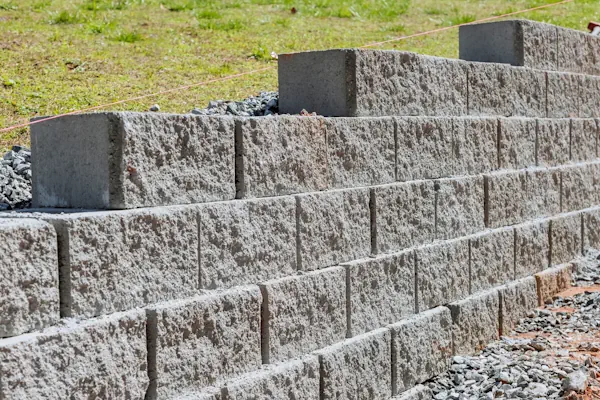
Concrete block and reinforced poured concrete are popular for commercial applications. They resist movement and weathering while maintaining a clean, professional appearance. Textured or non-slip finishes add safety and visual appeal.
Integrate Accessible Routes
When a wall changes elevation, an adjacent route or ramp must provide access that meets ADA slope and width guidelines. This creates a seamless connection between parking, walkways, and building entrances.
Drainage and Environmental Factors
Good drainage design protects both structure and accessibility. Water that collects near retaining walls can freeze, causing surfaces to heave or shift. It can also erode soil, changing elevation and slope consistency.
In Colorado’s freeze-thaw conditions, using permeable materials and proper backfill helps direct water safely away from walkways. Engineers often use granular fill to reduce hydrostatic pressure behind the wall. This approach improves lifespan and keeps accessible routes level year-round.
Proper water control also supports sustainability. Channeling runoff into landscaped areas or controlled drainage systems reduces environmental impact and aligns with modern green building practices.
The Cost of Noncompliance
ADA compliance isn’t optional. The U.S. Department of Justice can issue fines up to $75,000 for a first offense, with higher penalties for repeated violations. More than that, noncompliance can damage a brand’s reputation and limit customer access.
For property owners, designing correctly from the start is far more cost-effective than fixing problems later. A compliant retaining wall also adds resale value and demonstrates professionalism to clients, inspectors, and tenants alike.
Choosing the Right Retaining Wall Partner
Building a retaining wall that meets ADA standards takes true collaboration between designers, engineers, and skilled contractors. The right team understands both the structural and human aspects of accessibility. Experience with slope management, drainage systems, and compliance requirements ensures the final design performs safely and looks professional.
From the first survey to final inspection, attention to detail matters. A qualified contractor will guide the process through planning, permitting, installation, and long-term maintenance, ensuring the wall supports both usability and stability.
Creating Safer, More Accessible Commercial Properties
A well-built commercial retaining wall does more than support soil. It shapes how people interact with your property every day. Aligning construction with ADA standards creates a space that is both compliant and welcoming.
Accessibility reflects quality and care. It protects your investment, supports community inclusion, and adds long-term value to your site. Choosing a contractor who understands engineering, safety, and accessibility ensures your project performs for years to come.
In the Colorado Springs area, Derksen Land Solutions is the trusted choice for ADA-compliant retaining walls. Each project is built with safety, drainage, and durability in mind to deliver results that stand the test of time.