Retaining Wall Construction Mistakes to Avoid
The Science Behind a Strong Wall
Building a retaining wall is not just a weekend project. It combines elements of physics, hydrology, and soil mechanics. The structure must resist lateral earth pressure while allowing water to drain freely behind it.
A well-designed wall starts with careful planning. Factors like soil type, slope gradient, and rainfall patterns determine how the wall will perform over time. The International Building Code (IBC), Section 1807 specifies that retaining walls must be designed to resist sliding, overturning, and foundation failure. When each part of the design is handled correctly, the wall performs reliably year after year.
Most retaining wall problems can be traced back to preventable mistakes. Builders may skip essential steps, underestimate soil pressure, or neglect proper drainage design. Inadequate base preparation and insufficient drainage are two of the most common causes of structural distress.
Identifying and correcting these issues during the planning phase is the key to building a retaining wall that remains stable, functional, and secure for decades.
Here are some mistakes to avoid when constructing a retaining wall:
Ignoring Soil Conditions
- Soil behavior directly affects wall stability. Clay-heavy soils expand when wet, creating additional outward force. Sandy soils drain better but provide less resistance to shifting. Many walls fail because builders do not analyze the soil before construction.
Understanding the soil beneath your wall is essential for long-term stability. Different soils behave in unique ways: clay expands when wet, while sandy soils may shift or compact unevenly. The U.S. Department of Agriculture’s Soil Survey Manual emphasizes that evaluating soil texture, structure, and drainage characteristics is critical when determining a site’s suitability for construction. Proper assessment of soil permeability and stability helps prevent structural settlement and drainage failures. Conducting a professional soil analysis before building ensures that the footing and base design match the site’s actual ground conditions.
Poor Drainage Planning
- Water is the most common cause of retaining wall damage. When moisture collects behind the wall, it builds hydrostatic pressure that pushes outward over time. Controlling water movement is essential for stability and erosion prevention.
A perforated drainpipe installed at the wall base can effectively redirect water. This pipe should rest on a compacted gravel bed and be wrapped in filter fabric to prevent clogging. Clean angular gravel should fill the space behind the wall to allow free drainage. Adding weep holes through the wall face can relieve excess water pressure. Together, these measures create a stable environment that prevents failure.
Building on a Weak Base
- The base is the foundation of the entire structure. If it is uneven or unstable, the wall will shift or tilt over time. A strong foundation typically consists of a compacted gravel footing or reinforced concrete pad placed on undisturbed subgrade.
For colder regions, the base should extend below the frost line to prevent heaving caused by freeze-thaw cycles. As a best practice, bury roughly one-eighth of the wall’s total height below grade. This buried section acts as an anchor, increasing the wall’s resistance to soil pressure. Neglecting the base is one of the fastest ways to shorten a wall’s lifespan.
Skipping Reinforcement
- Reinforcement strengthens a retaining wall against the constant pressure of soil and water. Without it, walls taller than a few feet often begin to bow outward.
Geogrid mesh is one of the most effective reinforcement materials. It interlocks with the soil, distributing stress evenly through the backfill. In more demanding conditions, contractors may use rebar or tie-back anchors for added stability. The correct reinforcement design depends on wall height, soil type, and the wall’s purpose. Proper reinforcement ensures that the wall acts as one cohesive, load-bearing structure.
Choosing the Wrong Materials
Material selection determines both the durability and appearance of a retaining wall. Each option has distinct advantages and limitations depending on climate and soil type.
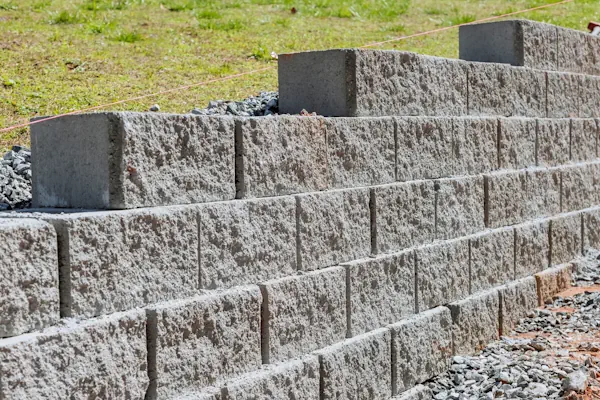
- Concrete blocks: Highly durable and moisture resistant, ideal for most commercial and residential uses.
- Natural stone: Offers a premium look but requires expert installation to ensure stability.
- Treated timber: Cost-effective but prone to rot in wet conditions.
- Poured concrete: Provides seamless strength but must be reinforced to prevent cracking.
Builders should always use materials rated for structural loads and outdoor exposure. Aesthetic appeal is important, but performance under pressure is what truly determines longevity.
Overlooking Permits and Local Codes
Many property owners underestimate how regulated retaining wall construction can be. According to the International Building Code (IBC), any wall exceeding four feet in height generally requires a permit and engineering design approval. These codes ensure that walls meet minimum safety and drainage requirements.
Failing to obtain proper permits can result in costly fines or mandated reconstruction. It can also lead to legal liability if the wall fails and causes property damage. Checking with local building authorities before starting work ensures compliance and prevents future complications.
Improper Backfilling Techniques
Backfilling is often treated as an afterthought, yet it directly affects wall stability. Using excavated soil, especially clay or organic matter, can trap moisture and create additional weight behind the wall.
Using free-draining granular backfill such as crushed stone or angular gravel allow water to move freely while compacting tightly for structural support. Add backfill in layers of six to eight inches and compact each one thoroughly. Finally, grade the surface to slope gently away from the wall. This combination prevents hydrostatic buildup and keeps the structure upright.
Building a Wall That Endures
When each of these factors is addressed correctly, a retaining wall becomes more than a landscape feature. It becomes a long-term structural investment. Soil testing, proper drainage, and precise reinforcement not only prevent failure but also improve aesthetics and property value
.
According to NCMA, walls designed with correct drainage and soil management can last 50 years or more with minimal maintenance. That kind of durability pays dividends in peace of mind and long-term savings.
Build with Confidence
Avoiding these mistakes in retaining wall construction protects your investment and ensures lasting results. Each decision, from testing soil to choosing materials, affects performance and longevity. A well-built wall does not just hold back soil; it strengthens the foundation of your property.
Ready to start your project? Contact the experts at Derksen Land Solutions for professional retaining wall construction and on-site consultation. Our team designs and builds retaining walls that combine precision, strength, and visual appeal. Build it right the first time, and your wall will stand firm for generations.