The Most Common Mistakes Retaining Wall Builders See on DIY Projects
When homeowners begin shaping their land, retaining wall builders often see the same issues appear on DIY attempts. Retaining walls seem simple at first glance, yet the structure must support constant pressure from soil, water, and changing weather. A small mistake during construction may not show up right away, but it often becomes visible after the first heavy rain or freeze. Many problems come from overlooked details, rushed preparation, or a misunderstanding of how retaining walls actually work. Once pressure starts to build behind the structure, the wall has no option but to react.
Why DIY Retaining Walls Fall Short
A retaining wall holds back soil that naturally wants to move downhill. This creates a long-term battle between the wall and the forces behind it. Soil expands, contracts, softens, and shifts throughout the seasons. Water collects behind the wall and adds weight. The freeze-thaw cycle creates movement that pushes against every block. The National Concrete Masonry Association highlights drainage and reinforcement as two of the most important elements for long-term stability.
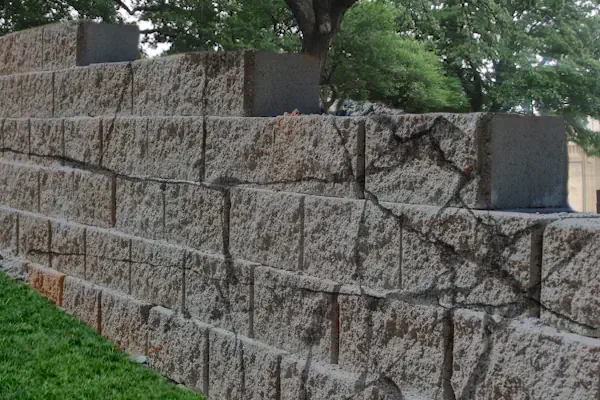
When these core elements are missing or incomplete, the wall often shows signs of stress. Cracking, leaning, bulging, and separation between blocks are early indicators. DIY builders may not anticipate this stress because the wall can look perfectly stable on installation day. The problems appear later, when the soil becomes saturated or freezes, or when gravity gradually pulls the slope forward. Understanding how these forces work is essential for a lasting result. A good way to understand where DIY projects go wrong is to look at the first step professionals focus on, which is the foundation beneath the wall.
Base Preparation That Cannot Handle Seasonal Movement
Every strong retaining wall begins below the ground. The base holds the structure upright and keeps it aligned as the soil moves during rain, snow, and dry spells. Many DIY builders dig a shallow trench, compact the soil, and begin stacking blocks. The problem with this approach is that soil does not provide long-term stability. It shifts, absorbs water, and settles unevenly.
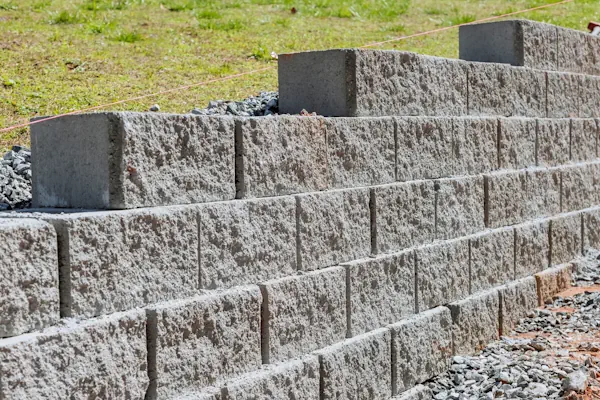
A proper installation includes a deep trench filled with compacted gravel, which spreads the weight across a stable surface. The gravel locks together and forms a solid foundation that resists seasonal changes. Without this base, the wall often begins to lean or sink as the soil adjusts. Even a small amount of movement at the bottom can push the entire structure out of alignment. Professionals spend considerable time preparing the base because it determines how the rest of the wall performs. Once the base is prepared correctly, the next priority is managing water, since moisture behind the wall creates more pressure than most people expect.
Missing or Improper Retaining Wall Drainage Pipe
Water has more influence on retaining walls than most people realize. When water collects behind a wall, it increases pressure dramatically. This pressure forces the wall outward and weakens the structure from behind. The Federal Highway Administration identifies poor drainage as a leading cause of retaining wall failure and structural instability:
A retaining wall drainage pipe channels water away from the wall and prevents it from building up. The pipe usually sits behind the first course of blocks and runs along the base. Clean gravel surrounds the pipe and allows water to flow easily. When this system is missing, water becomes trapped. During heavy storms, the wall may bulge or crack as it absorbs the force. Over time, trapped water also softens the soil and removes support from behind the structure.
Many DIY walls fail because the builder did not include a drainage pipe or used the wrong materials. Surrounding the pipe with dirt instead of gravel stops the flow and increases pressure. Without clear drainage paths, the wall faces far more stress than it was designed to handle. Proper drainage protects the structure from water, but the wall also needs strength to resist soil pressure, which brings reinforcement into the picture.
Walls Without Anchors or Reinforcement
When a retaining wall reaches a certain height, reinforcement becomes essential. Soil pressure increases with depth, which means the bottom of a tall wall experiences more force than the top. Retaining wall anchors, geogrid, and other reinforcement systems connect the wall to the soil behind it. They create a stronger structure that acts as a single unit rather than individual blocks.
DIY projects often skip reinforcement because it adds complexity. Builders may assume the weight of the blocks alone will hold back the soil. While this may work for very short walls, anything taller usually needs support. Without reinforcement, the soil can push the wall forward. This creates a slow, steady lean that becomes more noticeable over time. On steep slopes or in loose, sandy soils, reinforcement is even more important.
Professionals choose reinforcement based on wall height, soil type, and slope. They often install multiple layers of geogrid at specific intervals. This design spreads pressure across a wider area and helps the wall stay upright through seasonal changes. Even with reinforcement in place, the materials behind the wall play a major role in how much pressure the structure will face over time.
Backfill Materials That Add Pressure Instead of Reducing It
Backfill plays a major role in how a retaining wall handles moisture. Soil, clay, and other dense materials absorb water and expand. This expansion increases pressure on the wall. Many DIY builders backfill with whatever material is available nearby, often the same soil removed during excavation.
Professionals use clean, angular gravel because it allows water to drain quickly. Gravel does not hold moisture and does not expand during wet weather. When combined with proper drainage, it keeps pressure low and improves the stability of the entire structure.
Poor backfill choices create long-term issues. Retaining wall cracking, bulging, and uneven movement often come from trapped moisture in the backfill. Even a well-built wall cannot resist constant pressure from heavy, saturated soil. Choosing the right backfill is one of the most important parts of the construction process. Choosing the right backfill helps the wall manage moisture, but the slope itself introduces another challenge that many DIY builders overlook.
Walls Built Without Accounting for Natural Slope Movement
Slopes are dynamic environments. Soil shifts gradually over time due to gravity, water flow, and temperature changes. A retaining wall must be designed to handle this natural movement. Many DIY builders do not step the foundation up the slope or adjust the design for uneven ground.
Stepped foundations follow the natural grade and create a stable platform for the wall. Proper drainage prevents water from pooling behind uphill sections. Reinforcement helps tie the structure into the slope. Without these features, the wall often begins to drift or rotate as the soil moves. This slow shift can cause cracks, gaps between blocks, or a noticeable lean. As the slope shifts, early signs of stress often appear in the wall, and this is when prompt attention becomes important.
Delaying Retaining Wall Repair When Problems Start
Early signs of movement are easy to overlook. A small crack or a slight lean may not seem important, especially if the wall still appears functional. However, these early symptoms usually indicate that pressure is building behind the structure. Retaining wall repair becomes more challenging when the wall continues to move.
Addressing problems early allows professionals to fix drainage, adjust backfill, or install reinforcement before the damage spreads. Preventative repair often costs less than reconstructing a failed wall. Homeowners who act quickly can protect the surrounding landscape and avoid larger structural issues. Spotting these early issues is only part of the equation, and understanding when to call a professional helps prevent larger problems.
Why Working With Retaining Wall Builders is Important
Experienced retaining wall builders understand the forces that act on a wall every day. They consider soil type, local weather patterns, drainage needs, and the slope of the land. Their approach prevents common DIY mistakes and creates a structure that lasts.
A professionally built retaining wall supports the landscape, protects the property, and withstands years of seasonal changes. It also provides peace of mind, knowing the wall was designed with the right materials, proper engineering, and reliable drainage.
If you want dependable results, Derksen Land Solutions offers retaining wall installation, repair, and engineering support that keeps your property safe and stable for years to come.