What Commercial Property Owners Should Know About Retaining Wall Design and building on slopes
Derksen Excavating
Developing a commercial property on steep slopes can feel intimidating at first. The land looks unpredictable, and the grade changes often make the planning process more involved than usual. Still, these challenging spaces often become some of the most impressive commercial properties when they are designed with intention and supported by the right retaining wall system.
Before any construction begins, it helps to understand how slope stabilization, drainage, geotechnical evaluation, and retaining wall engineering work together. When you know how these pieces fit, you can move through the project with confidence instead of uncertainty.
Why Steep Slopes Need More Planning Than Flat Sites
Steep terrain behaves differently from level ground. Soil moves more easily, water flows faster, and the forces acting on a retaining wall increase as the slope becomes sharper. These conditions make precision especially important. A wall built on flat land might perform well with a basic design, but a steep slope requires calculations and materials that match the demands of the site.
The reward for this extra planning is worth it. With a well-engineered retaining wall, land that once felt too steep for development can become usable space for parking, building pads, drive lanes, or outdoor areas. The transformation starts with understanding what is happening within the slope itself.
Start With a Geotechnical Survey
A geotechnical survey gives engineers and contractors a clear picture of what is beneath the surface. Instead of relying on guesswork, they learn how the soil behaves, how water moves through it, and whether the slope shows signs of previous instability. A strong geotechnical report usually explains:
- The type of soil present
- Whether the slope has a history of movement
- How moisture affects the soil
- How much pressure the soil will place on a retaining wall
The United States Geological Survey notes that slopes become unstable when the force of gravity becomes stronger than the ability of the soil or rock to hold itself together. Factors like steep terrain, excess moisture, and site disturbance increase the likelihood of movement
Once the results are in, the retaining wall design can be tailored to the site rather than forcing a one-size-fits-all solution.
How Retaining Wall Engineering Supports Steep Terrain
Engineering is where the project shifts from understanding the slope to shaping it. On steep ground, the wall must be designed with the right combination of strength, reinforcement, and drainage capacity.
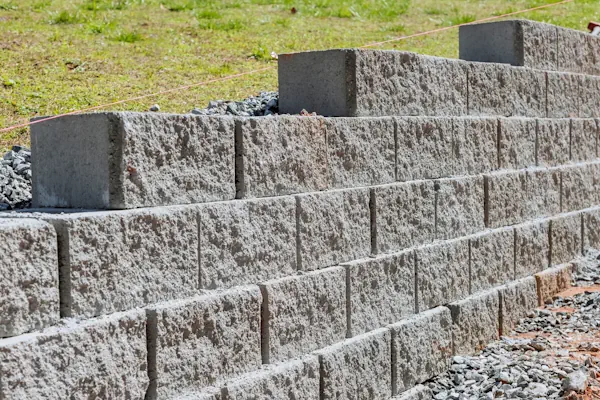
Segmental retaining walls are a common choice because they combine interlocking concrete units with structural flexibility. They adapt well to grade changes and can handle heavy loads when paired with geogrid reinforcement. Geogrid extends behind the wall, stabilizing the soil mass and creating a stronger structural zone.
For larger commercial sites or tall walls, engineers may use mechanically stabilized earth systems, which blend engineered fill with reinforcement layers. In some situations, large block gravity walls are preferred because their weight alone provides powerful resistance. Each system is chosen for how well it aligns with the slope angle, soil behavior, and overall goals of the project.
With the structural design in place, the next priority is addressing how water moves through the slope.
Why Retaining Wall Drainage Is Essential on Steep Sites
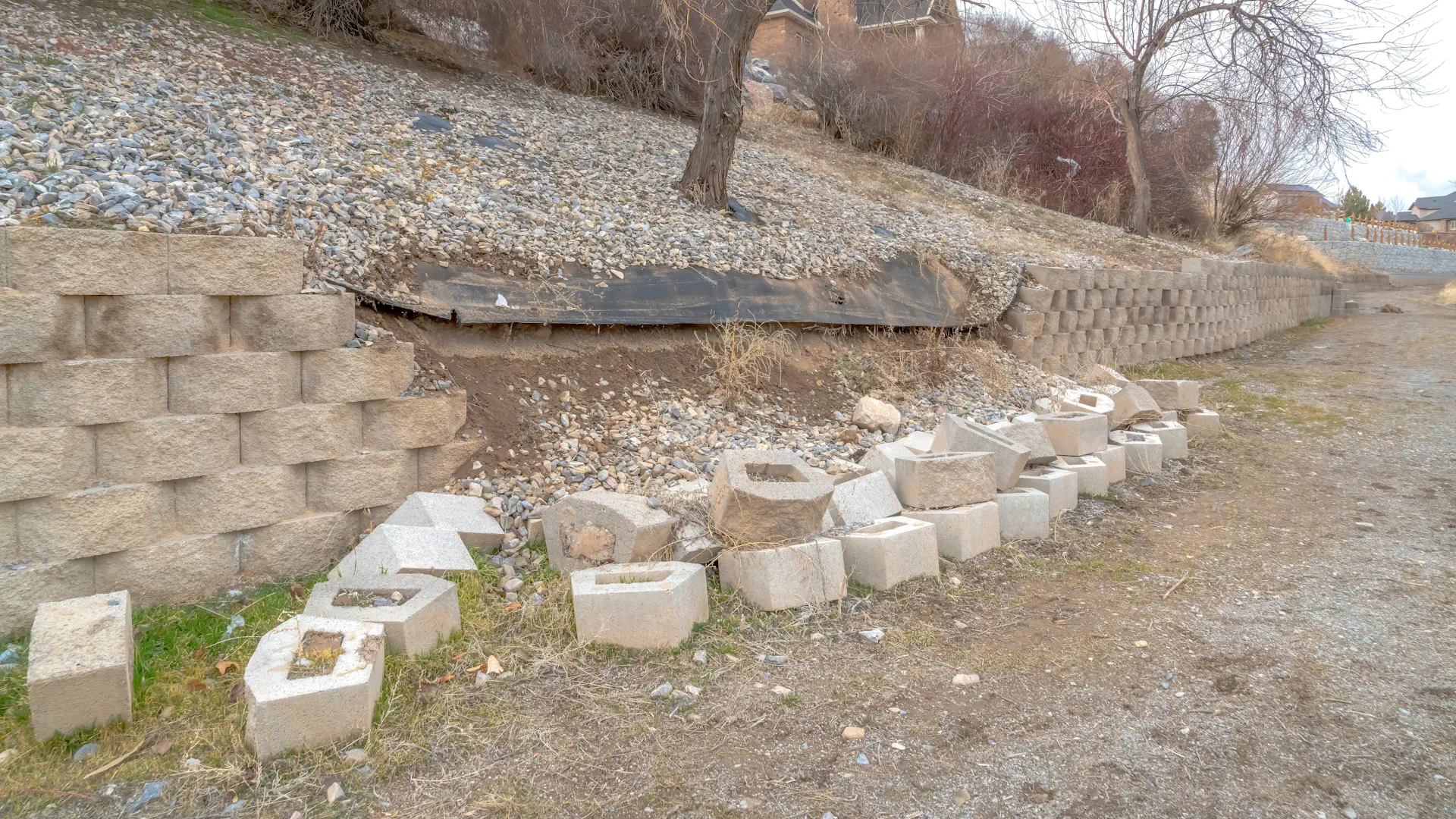
Water is one of the biggest contributors to retaining wall problems, especially on steep slopes where runoff gathers speed. If water becomes trapped behind a wall, pressure builds and pushes outward. Over time this can weaken the structure, shift soil, or cause erosion at the base.
A reliable drainage system usually includes a perforated drain pipe, free-draining gravel, and filter fabric to prevent clogging. These components work together to move water away from the wall instead of letting it accumulate behind it.
According to the Federal Highway administration, inadequate drainage is one of the leading causes of retaining wall failure in environments where water flow is fast or unpredictable
Once drainage is in place, attention shifts to protecting the rest of the slope.
Protecting the Slope With an Erosion Control Blanket
Steep slopes are especially vulnerable during and after construction, when exposed soil has not yet stabilized. An erosion control blanket helps hold the slope in place by absorbing rainfall impact and slowing surface water. This gives vegetation time to establish roots, which strengthens the slope naturally over time.
Depending on the site, teams may also use hydroseeding, rock mulch, riprap, terracing, or native plant restoration. These strategies reduce erosion and help the slope manage water safely, especially during Colorado’s seasonal storms.
Best Practices for Hillside Construction
Hillside construction works best when each step builds on the one before it. Careful sequencing helps prevent settling, cracking, or unexpected movement later in the project.
Successful steep-slope construction often includes:
- Removing soft or unsuitable soils before installation
- Preparing the subgrade with proper grading and compaction
- Installing geogrid reinforcement at the exact lengths and elevations specified
- Keeping drainage outlets clear and functioning
- Monitoring soil and weather conditions throughout the build
When these steps are followed consistently, the wall performs far more reliably for years to come.
How Commercial Retaining Walls Improve Steep Sites
Retaining walls do more than reshape the land. They stabilize the slope, protect nearby structures, and create safe, level areas that would not exist otherwise. On steep commercial sites, these walls become essential parts of everyday function, supporting drive lanes, building entrances, walkways, outdoor spaces, and other high-traffic areas.
Because they play such an important role in site stability and usability, the quality of the design and construction directly impacts the long-term performance of the property.
Why the Right Contractor Matters
Steep slopes are not the place for shortcuts. A strong retaining wall contractor understands how soils behave, how drainage should be integrated, and how to work alongside engineering teams to make sure the design performs under real-world conditions.
An experienced contractor will evaluate the full property, identify risks early, recommend the appropriate wall system, and follow best practices during installation. When you work with a company that has deep experience with commercial retaining walls and hillside construction, the project becomes smoother from start to finish.
Building Confidence Into Steep-Slope Development
Steep slopes come with challenges, but they also offer opportunities to create efficient, attractive, and high-performing commercial spaces. With solid planning, dependable engineering, and thoughtful slope stabilization, your retaining wall becomes a long-lasting investment that helps your property function safely year after year.
If you are planning development on steep slopes and want a retaining wall you can trust, the Derksen team is ready to help. Colorado property owners rely on Derksen Land Solutions for their deep experience with slope stabilization and complex wall systems.